If a boiler cuts out after a few minutes, it is usually reacting to a fault signal from one of its built-in safety sensors. The shutdown is a protective response, not a random failure. Common causes include low boiler pressure, a blocked condensate pipe, a faulty flame sensor, or overheating. This article explains each cause, shows how to identify which one applies to your boiler, and outlines the steps to resolve it.
Key takeaways
- Check the pressure gauge first. A reading below 0.8 bar triggers an automatic shutdown.
- Carbon deposits on the flame sensor rod can cause lockout. Clean the rod with fine emery cloth.
- A pressure drop during firing often points to a pipework leak or a failing expansion vessel.
- After bleeding radiators, repressurise the system to between 1 and 1.5 bar.
- A drifting thermistor can report false water temperatures and force an immediate shutdown.
- Boiler lockout occurs when the control board cannot confirm a stable flame within three to five seconds.
- Any work on the gas valve, burner, or flue must be carried out by a Gas Safe registered engineer.
Common Reasons a Boiler Shuts Down Shortly After Starting
| Cause | What happens |
|---|---|
| Low water pressure | The pressure sensor detects a reading below the safe threshold and shuts the boiler down shortly after firing. |
| Faulty flame sensor | The boiler cannot confirm a stable flame and cuts the gas supply, often leading to lockout. |
| Blocked heat exchanger or failed pump | Poor circulation causes overheating and the high-limit thermostat shuts the boiler down to prevent damage. |
| Thermistor or thermostat fault | Incorrect temperature readings can make the boiler think it is overheating or that heat demand has ended. |
| Control board fault | The PCB may misread sensor data or fail to keep the burner running long enough. |
Check the boiler’s pressure gauge first. Most combi and system boilers require between 1 and 1.5 bar at rest. A reading below 0.8 bar will trigger the pressure sensor and force a shutdown within seconds of firing up.
A faulty flame sensor is another common cause. This sensor checks whether ignition has occurred and cuts the gas supply if it cannot confirm a stable flame. Carbon deposits on the sensor rod can produce a false reading, causing the boiler to lock out even when combustion is working correctly.
Overheating from a blocked heat exchanger or a failed pump can produce the same short-cycle pattern. The boiler reaches its upper temperature limit before water circulates properly. The high-limit thermostat then triggers a shutdown to prevent damage. You can find boiler faults by fault code to narrow down which component has failed. For broader guidance on heating systems within rented or owned properties, Property Help covers landlord and homeowner obligations in detail.
Low Water Pressure and Its Effect on Boiler Operation
If a boiler fires, then cuts out within two to three minutes, the pressure sensor has likely detected a drop below the minimum threshold. It shuts the burner down to protect the heat exchanger. That is a deliberate safety response.
A pressure drop during firing usually points to a slow pipework leak, a failing expansion vessel, or a bled radiator that was not repressuised afterwards. Repressurise the system to between 1 and 1.5 bar using the filling loop. Then monitor the gauge over 24 hours. If the pressure drops again, a leak or a waterlogged expansion vessel is likely.
The expansion vessel absorbs pressure changes as water heats and expands. If the internal diaphragm fails, the vessel fills with water and can no longer manage pressure fluctuations. That can trigger repeated cutouts. A Gas Safe registered engineer can test and replace it if needed.
Faulty Thermostat, Sensors, and Control Board Issues
A miscalibrated thermostat is one of the most overlooked causes of short cycling. It reads the room temperature, calls for heat, then cuts the signal within minutes when its sensor picks up a false reading. The thermistor inside the boiler works separately. It monitors primary circuit water temperature and reports continuously to the control board. If it drifts out of calibration, it can trigger an immediate shutdown by reporting overheating that is not occurring. Replacing a faulty thermistor typically costs under £30 for the part.
Control board faults are harder to diagnose without test equipment. A damaged PCB can misread sensor data or fail to hold the relay open long enough to sustain the burner. These faults often mimic pressure or ignition problems. Routine boiler maintenance that includes sensor checks can catch thermistor drift before it escalates. A Gas Safe registered engineer can test thermistor resistance against the manufacturer’s specification and confirm whether the board itself is at fault.
Flame Failure, Gas Supply Problems, and Lockout Faults
If a boiler ignites briefly and then cuts out, it is usually in lockout. This is a hard shutdown the control board triggers when it cannot confirm a stable flame within three to five seconds.
The flame detection electrode verifies ignition by passing a small current through the flame. Carbon deposits or corrosion can weaken that signal, so the board reads a failure. Cleaning the rod with fine emery cloth often restores it. A cracked rod or damaged lead needs replacement.
Gas supply faults can cause the same symptom. A partially closed valve, low pressure, or a blocked line can starve the burner before ignition is confirmed. Check whether other gas appliances work normally. If they do not, the fault lies upstream with the supplier.
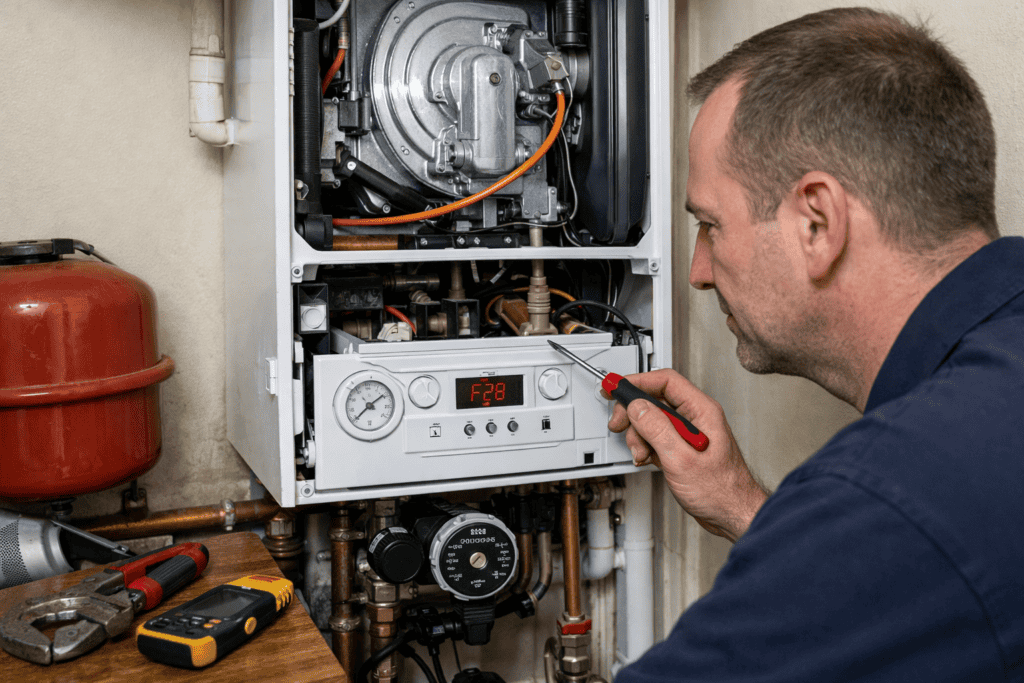
The error code on the fascia shows which condition triggered lockout. Cross-reference it with the manufacturer’s fault table and a reliable boiler fault guide before ordering parts. If you reset the boiler without fixing the root cause, lockout will return straight back. Three lockouts in quick succession warrant a Gas Safe registered engineer, as repeated forced resets can damage the gas valve.
When to Call a Gas Safe Engineer and What to Expect
Repairing a boiler without the right qualifications can void the warranty, invalidate home insurance, and breach the Gas Safety (Installation and Use) Regulations 1998. Any work on the gas valve, heat exchanger, burner, or flue must be done by an engineer registered with the Gas Safe Register.
Call a Gas Safe engineer if the boiler keeps locking out, the flame turns yellow or orange, there is a gas smell, or a fault code points to gas valve failure. These signs usually mean a component needs testing or replacement under controlled conditions, not a reset.
A diagnostic visit typically takes 45 to 60 minutes. It covers flue gas analysis, gas pressure testing, and inspection of the ignition electrode, flame sensor, and heat exchanger. If a part needs ordering, expect a second visit.
If a boiler is over ten years old and has had two or more call-outs in twelve months, replacement is often cheaper than repair. Modern condensing boilers run above 90% efficiency; a pre-2010 unit may manage 70 to 80% at best. To arrange a diagnosis or installation, contact a local Gas Safe plumber.
Frequently Asked Questions
Why does my boiler cut out after a few minutes of running?
Short cycling is the most common cause. The boiler fires, detects a fault such as low pressure, overheating, or a blocked flue, then triggers its safety shutoff. Start by checking the pressure gauge. It should read between 1 and 1.5 bar when cold.
Can low water pressure cause a boiler to switch off shortly after starting?
Yes. It is one of the most common causes. Most boilers shut down automatically when pressure drops below 1 bar and treat it as a safety fault. Check the pressure gauge on the front of the unit. If it reads below 1 bar, repressurising the system via the filling loop usually restores normal operation.
Does a faulty thermostat make a boiler turn off too soon?
Check the thermostat setting first. If the temperature is set too low, the boiler reaches the target quickly and shuts down before the heating cycle finishes. A faulty thermostat can also send incorrect readings, which may cause the boiler to cut out even when rooms remain cold.
Can overheating trigger a boiler to shut down after a few minutes?
Yes. A boiler’s high-limit thermostat cuts power as soon as the internal temperature rises above a safe threshold. Common causes include blocked heat exchangers, low water flow, or a faulty pump. Once it trips, the boiler locks out until the fault is fixed and the unit resets.
When should I call a Gas Safe registered engineer for a boiler that keeps cutting out?
Gas Safe registration is a legal requirement for anyone working on gas appliances in the UK. If your boiler cuts out repeatedly, shows a fault code, loses pressure frequently, or smells of gas, call a registered engineer. Do not attempt internal repairs yourself. Gas work without registration carries serious safety and legal consequences.