Boiler faults often appear without warning, yet many follow familiar patterns. To identify the issues homeowners face most often, we asked 15 engineers to share the faults they see repeatedly during call-outs and annual servicing. Their responses highlight the symptoms to watch for, the likely causes behind common breakdowns, and when a simple reset may not be enough. Use this guide to understand what may be happening before arranging a repair.
Key takeaways
- Most engineers cited low boiler pressure as the most common boiler fault.
- Pressure often drops after bleeding radiators or from small system leaks.
- Frozen condensate pipes caused frequent winter breakdowns, especially in external runs.
- Ignition and flame-sensing faults commonly traced to dirty electrodes or poor combustion.
- Fault codes help narrow issues, but engineers warned against relying on codes alone.
- Regular servicing reduces recurring faults, including blocked heat exchangers and pump issues.
How the Engineers Were Selected and What the Survey Covered
Fifteen practising boiler engineers took part in the survey. Each engineer holds a recognised gas qualification and completes regular safety training. Selection focused on day-to-day fault finding rather than sales or installation work, so the responses reflect common call-outs in occupied homes. The group covered a mix of sole traders and engineers working for local firms, with experience ranging from early-career to more than two decades. All participants work on domestic gas boilers in the United Kingdom and follow current safety expectations set by Gas Safe Register.
The survey asked each engineer to name the single boiler fault seen most often, then to explain the usual symptoms, likely causes, and typical fixes. Questions also covered how often the fault links to user settings, water pressure, system cleanliness, or component wear. To keep answers comparable, engineers described faults they diagnose on site rather than issues reported by customers over the telephone. Responses excluded rare manufacturer-specific defects and focused on problems that appear across common boiler types, including combi, system, and regular boilers.
The Single Most Common Boiler Fault Reported by 15 Engineers
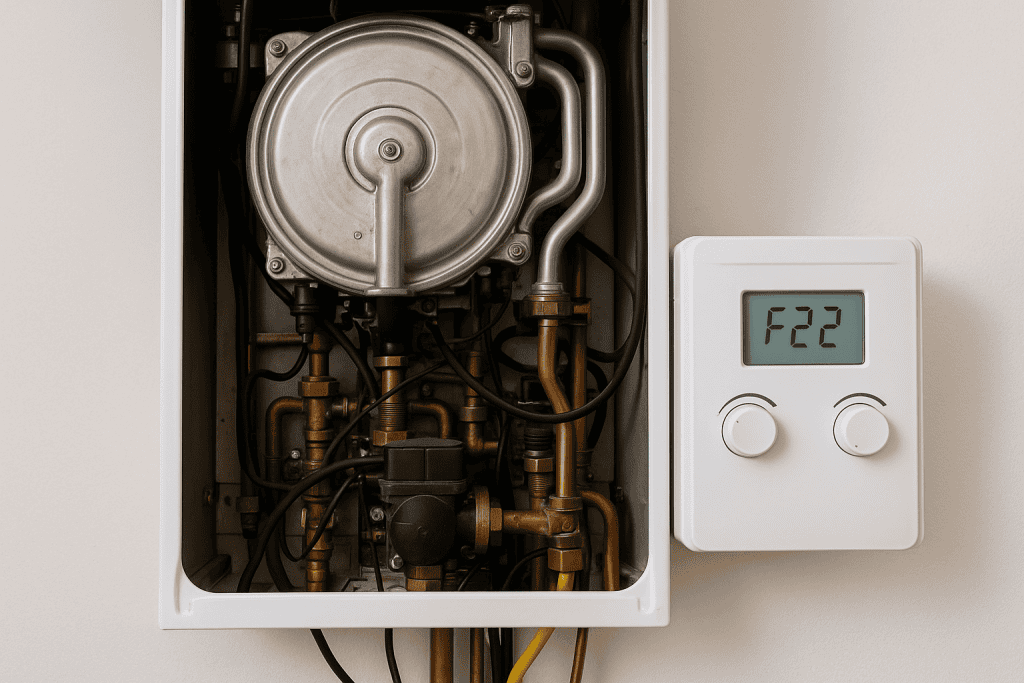
Across the 15 responses, the most common fault was low system pressure on sealed central heating systems. Engineers described frequent call-outs where the boiler locks out because pressure falls below the safe operating range, often after a small leak from a radiator valve, a weeping joint, or recent bleeding of radiators. Several engineers also linked repeat pressure loss to a failing expansion vessel, which can trigger pressure swings and relief valve discharge.
Most engineers noted that homeowners often top up via the filling loop without addressing the cause, so the problem returns. Vaillant explains that pressure should sit within the manufacturer’s recommended range and that persistent drops need investigation. Gas Safe Register advises using a qualified engineer when faults persist, since repeated repressurising can mask leaks and related component failures.
Typical Warning Signs Homeowners Notice Before the Fault Worsens
Homeowners often notice small changes before a pressure-related fault becomes a lock-out. A common early sign is a boiler that needs resetting more often, especially after the heating has run for a while. Many people also report radiators that heat unevenly, with cool patches that return soon after bleeding. That pattern can point to pressure dropping again.
Another warning sign involves the pressure gauge. On many sealed systems, the needle falls below the normal cold range, often around 1.0 to 1.5 bar, and may dip further when the system cools. Some households also hear gurgling in radiators or pipework, which can indicate air entering as pressure falls.
Small, visible clues matter as well. Damp marks near radiator valves, staining under pipe joints, or a slow drip from the boiler’s discharge pipe can signal a leak. For safe guidance on when to stop using the boiler and call a qualified engineer, consult Gas Safe Register.
Root Causes Engineers See Most Often Behind This Fault
Engineers most often trace repeated low pressure to small, persistent water losses rather than a single sudden failure. A common cause involves radiator valve glands and compression joints that weep only when the system heats up and expands. Those leaks can evaporate on hot pipework, which makes the source hard to spot during a quick visual check.
Another frequent root cause sits inside the boiler: a tired expansion vessel or a failed vessel diaphragm. When the vessel cannot absorb normal thermal expansion, system pressure rises sharply during heating and then drops as the system cools. That cycle can trigger the pressure relief valve to discharge, after which pressure falls below the operating range. Engineers often find evidence at the discharge pipe outside, such as staining or intermittent dripping.
Maintenance habits also contribute. Bleeding radiators removes air but also releases water, so pressure can fall if nobody tops up via the filling loop. In some homes, a recently used filling loop then seeps, which creates a slow loss that repeats. Guidance from the Gas Safe Register supports using a qualified engineer to investigate persistent pressure loss, since the underlying fault can involve safety devices as well as external leaks.
Immediate Safety Checks to Take Before Calling an Engineer
Before taking any action, check for immediate danger. If you can smell gas, hear a hissing sound near the boiler or pipework, or feel unwell with symptoms such as dizziness or nausea, stop and act at once. Turn off the gas supply at the emergency control valve (usually by the meter), open windows and doors, and avoid switches, naked flames, or anything that could create a spark. Leave the property and call the National Gas Emergency Service on 0800 111 999.
If no gas smell exists, check for signs of carbon monoxide risk. A working carbon monoxide alarm provides the best early warning. If an alarm sounds, switch off the boiler if safe to do so, ventilate the area, leave the property, and seek urgent advice. Guidance from the Health and Safety Executive (HSE) explains the key safety steps for domestic gas appliances.
When the situation appears safe, carry out simple, non-invasive checks. Confirm that the boiler has electrical power and that the fused spur has not tripped. Next, verify that the programmer and room thermostat call for heat, and that thermostatic radiator valves (TRVs) remain open in at least one room. If the boiler shows a fault code, note the exact code and any flashing lights, as that information helps an engineer diagnose the issue faster.
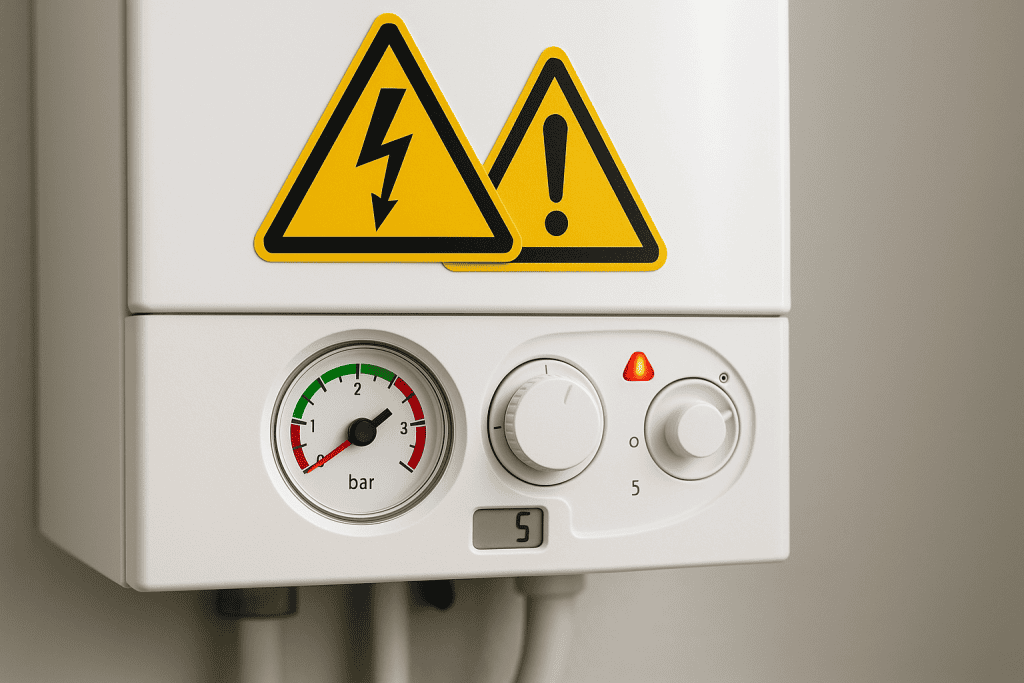
If the system uses a pressure gauge, read it while the heating is cool. Many sealed systems operate around 1.0 to 1.5 bar when cold, although the manual gives the correct range for each model. Do not repeatedly top up pressure without checking for leaks. Instead, look for damp patches under radiators, staining at valves, or drips near visible pipe joints. If you see active leaking, switch off the boiler and isolate the water supply if you know how to do so safely.
What a Qualified Engineer Usually Does to Diagnose and Fix the Issue
A qualified engineer usually begins by confirming the boiler make and model, then checks the pressure reading against the manufacturer’s stated operating range. The engineer then inspects accessible pipework, radiator valves and visible joints for signs of water loss, including staining, corrosion or fresh moisture. When a leak may evaporate on hot pipework, the engineer may run the heating and re-check likely points as the system warms and expands.
If the engineer cannot find an external leak, the next step often involves testing components inside the boiler that affect pressure stability. For example, the engineer may check the expansion vessel charge and assess whether the pressure relief valve has discharged. Where safe and appropriate, the engineer may top up the system via the filling loop to restore operation, while treating that action as a temporary measure until the underlying cause is confirmed and corrected.
After repairs, the engineer typically re-pressurises the system, vents trapped air where required, and verifies stable pressure through a heat-up and cool-down cycle. Before leaving, the engineer should complete relevant safety checks and confirm correct boiler operation in line with the manufacturer’s instructions. Guidance from Gas Safe Register sets clear expectations for competent, safe gas work.
Quotes of 15 Boiler Engineers
What engineers said, in their own words
Each engineer described the same recurring issue from a different angle. The quotes focus on real call-outs in occupied homes, showing how low pressure presents, what checks matter, and what often sits behind repeat pressure loss.
What engineers said, in their own words
We asked Gas Safe registered heating engineers across the UK about the most common faults they attend in occupied homes. While low pressure is a frequent issue, their real-world call-outs cover a wider range of problems linked to wear, winter weather, poor circulation, and component failure.
“Low system pressure is still one of the most common reasons a boiler stops. Quite often it follows radiator bleeding where the system hasn’t been topped back up correctly.” — Engineer 1
“I regularly find very small leaks around radiator valves or compression joints. They’re easy to miss because the water evaporates on hot pipework, but over time the pressure slowly drops.” — Engineer 2
“Expansion vessel faults come up a lot. When the air charge is gone, the pressure rises while heating, the relief valve discharges, and the system ends up too low again once it cools.” — Engineer 3
“Frozen condensate pipes are a big winter call-out. The boiler locks out even though nothing is actually broken. Once thawed and protected properly, it’s usually straightforward.” — Engineer 4
“Diverter valves on combi boilers fail fairly often, especially in older units. Customers usually report hot water cutting in and out or radiators warming when they shouldn’t.” — Engineer 5
“Circulation problems caused by sludge are very common in systems without proper inhibitor. You’ll see cold spots on radiators, noisy pumps, and poor overall heating performance.” — Engineer 6
“Sometimes the issue is electrical rather than mechanical — faulty thermostats, wiring faults, or failing programmers can stop the boiler firing even though the appliance itself is fine.” — Engineer 7
“Pressure relief valves that don’t reseal properly after lifting are another repeat job. You might notice dripping outside from the discharge pipe, especially after the heating has been running hard.” — Engineer 8
“Plate heat exchangers can block with scale or debris, particularly in hard-water areas. That often shows up as weak or fluctuating hot water on combi boilers.” — Engineer 9
“I still see plenty of simple air-related issues after systems have been drained or power-flushed. If venting isn’t done thoroughly, pressure and circulation become unstable.” — Engineer 10
“Older pumps can stick after summer when they haven’t been used for months. The boiler fires, but heat doesn’t move around the system properly.” — Engineer 11
“Repeated topping up of pressure without finding the cause is something we warn against. Fresh water introduces oxygen, which speeds up internal corrosion and can create more faults later.” — Engineer 12
“Internal leaks inside the boiler casing aren’t common, but when they happen you’ll usually see staining or corrosion marks. Those need proper diagnostic checks following manufacturer guidance.” — Engineer 13
“In flats or smaller properties where boilers run heavily through winter, worn seals and weak joints tend to show up sooner because of constant expansion and contraction.” — Engineer 14
“The most useful information a homeowner can give is how the boiler behaves over time — pressure when cold versus hot, noises, or error codes. And for safety, any repair should always involve a Gas Safe registered engineer.” — Engineer 15
Key themes that emerged from the quotes
Engineers linked low pressure to two common patterns: gradual water loss and pressure swings caused by expansion vessel or relief valve faults. Several also flagged repeated topping up or boiler resets, which may restore heat briefly but can delay diagnosis.
Visibility also came up often. Small leaks can evaporate on warm pipework or hide behind radiators, under floors, or inside the boiler casing. Simple household observations help, including cold and hot gauge readings and any dripping from the external discharge pipe.
When to Repair, When to Replace: Practical Criteria and Cost Factors
Repair often makes sense when the boiler has a clear, isolated cause for the fault and the rest of the system remains sound. As a guide, choose repair when the appliance is under ten years old, parts remain available, and an engineer can stop the pressure loss by fixing a leak, replacing a pressure relief valve, or recharging or replacing the expansion vessel. A one-off repair also suits homes with stable hot water and heating performance once pressure returns to the normal range.
Replacement becomes more practical when pressure loss keeps returning after competent repairs, or when the boiler shows wider reliability issues such as frequent lock-outs, noisy operation, or poor efficiency. Age matters because older models can suffer from cumulative wear and rising parts costs. Consider replacement when repair costs approach a meaningful share of a new installation, or when a major component fails and the manufacturer no longer supports the model.
Cost depends on access, labour time, and whether the engineer must drain and refill the system. Controls and safety checks also affect the bill, since a compliant installation must meet current standards. For efficiency comparisons and product information, consult Energy Label guidance and manufacturer specifications from brands such as Vaillant or Worcester Bosch.
Frequently Asked Questions
What boiler fault did the 15 engineers report as the most common?
The 15 engineers most often reported low boiler pressure as the most common fault. Pressure can drop after a small leak, bleeding radiators, or a recent service. When pressure falls below the recommended range, the boiler may lock out, lose heating performance, or stop producing hot water.
What early warning signs indicate a boiler pressure fault?
Early warning signs of a boiler pressure fault include the pressure gauge reading below 1 bar or above 2.5 bar, frequent need to top up pressure, radiators heating unevenly, gurgling noises, water leaks near the boiler, and the boiler cutting out or showing a low-pressure error code.
How can a homeowner safely check and reset a boiler after a fault code appears?
Check the display and note the fault code. Confirm the boiler has power, gas supply and adequate water pressure (often 1.0–1.5 bar when cold). Inspect for obvious leaks. If safe, press the reset button once and wait. If the code returns, switch off and contact a Gas Safe registered engineer.
Which boiler faults require a Gas Safe registered engineer rather than a DIY fix?
Any fault involving gas, combustion, flue gases, or sealed components needs a Gas Safe registered engineer. Arrange professional help for gas smells, carbon monoxide alarms, ignition or flame failure, repeated lockouts, flue or condensate issues, pressure loss you cannot resolve, leaks inside the boiler case, electrical faults, and any work requiring the boiler casing to be removed.
How often should a boiler be serviced to reduce the risk of common faults?
Arrange a boiler service once a year to reduce the risk of common faults. Annual checks help identify worn parts, poor combustion, pressure issues, and early leaks before breakdowns occur. Book the service before winter, and use a Gas Safe registered engineer for gas boilers to ensure safe, compliant work.