Inside a combi boiler, the diverter valve sends hot water either to the heating circuit or to the domestic hot water taps, depending on demand. When it fails, the boiler cannot prioritise correctly, which can leave households with no hot water or no heating. This article explains how diverter valves work, the most common failure modes, and what replacement parts and labour typically cost in the UK.
Key takeaways
- Diverter valves are not universal. Check your boiler model before ordering parts.
- Limescale buildup in hard water areas is a leading cause of valve seizure and failure.
- If the heating warms up when you request hot water, the diverter valve is likely faulty.
- Parts typically cost £20 to £80. Labour adds £150 to £300, bringing most jobs to £170 to £380.
- Worcester Bosch, Vaillant, and Ideal use proprietary designs, which can make older parts harder to source.
- Only a Gas Safe registered engineer can legally replace a diverter valve inside a boiler.
- An unregistered repair voids most boiler warranties. Do not attempt this work yourself.
What a Diverter Valve Does and Where It Sits in Your Plumbing System
Check your boiler model before ordering a replacement part. Diverter valves are not universal, and the wrong type can cause pressure loss or complete heating failure.
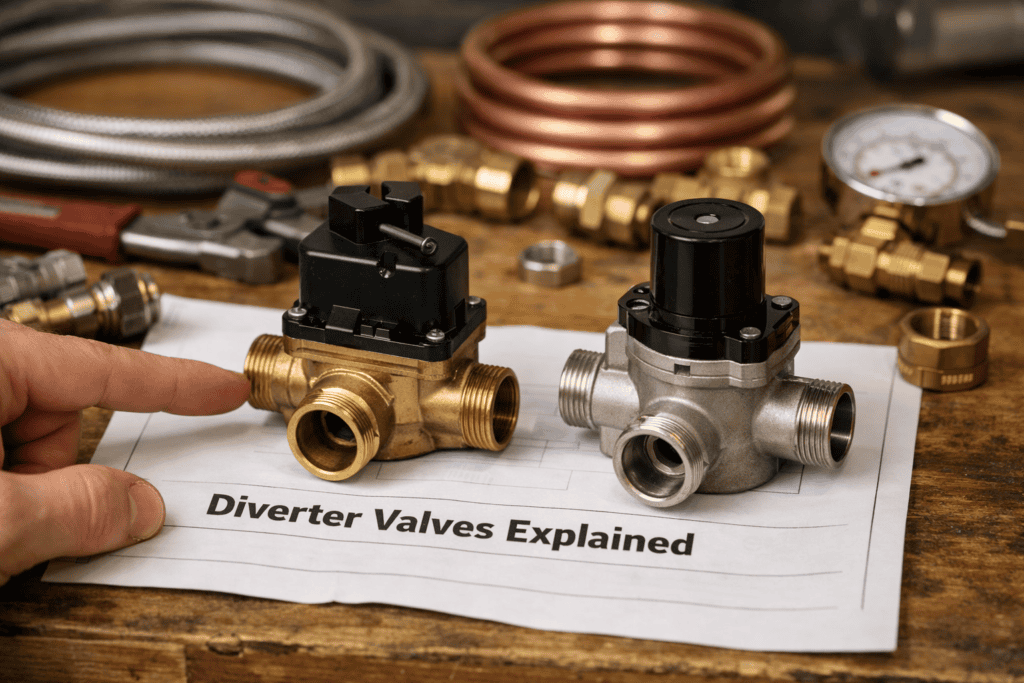
The diverter valve sits inside the boiler body on the primary circuit, between the heat exchanger and the system pipework. It directs heated water to the right destination: either the radiator circuit for central heating or the plate heat exchanger that produces domestic hot water. In a combi boiler, this switch happens automatically the moment a hot tap opens. That creates a pressure drop, which signals the valve to redirect flow away from the radiators.
Most combi boilers use a motorised diverter valve with a small actuator. If the actuator fails, the valve can stick in one position, often the heating position. That leaves taps running cold even when the boiler fires normally. Because the valve moves every time hot water is requested, it is one of the highest-cycle components in the system.
The Most Common Reasons Diverter Valves Fail
| Cause | What happens | Typical clue |
|---|---|---|
| Limescale on moving parts | Cartridge cannot shift cleanly between heating and hot water positions | Valve sticks or switches slowly, especially in hard water areas |
| Worn or split rubber seals | Pressure bleeds across the valve instead of being directed properly | Hot water turns lukewarm or flow is sent to the wrong circuit |
| Magnetite in old system water | Internal components wear gradually over time | Subtle symptoms until full failure develops |
| Actuator motor or micro-switch fault | Control signal does not move the valve even if the cartridge is intact | Electrical fault identified with a multimeter test |
Sticking diverter valves cause one of the most common boiler complaints: the heating comes on when hot water is requested, or hot water turns lukewarm while radiators stay cold. In most cases, a worn or seized cartridge inside the valve body causes the problem.
In hard water areas, limescale builds up on moving parts until the cartridge can no longer shift between positions. Rubber seals also harden and split over time, regardless of water hardness. This lets pressure bleed across the valve instead of directing flow correctly. Magnetite from old system water wears components gradually, often without obvious symptoms until the valve fails. Following a plumbing maintenance checklist that includes an annual power flush check and inhibitor top-up reduces this risk significantly.
Electrical faults are less common, but they are harder to diagnose. The actuator motor or micro-switch can burn out while the mechanical cartridge remains intact. That means the control signal never reaches the valve. A multimeter test across the actuator terminals quickly separates an electrical fault from a mechanical one before ordering parts.
How to Recognise a Faulty Diverter Valve
Symptoms rarely appear all at once. A diverter valve usually degrades gradually, so the early signs can look like minor boiler quirks rather than component failure.
The clearest sign is a conflict between heating and hot water output. If turning on a hot tap unexpectedly warms the radiators, or running a bath pulls heat from the central heating circuit, the valve is likely not switching cleanly between positions. When it sticks, either domestic hot water or central heating stops responding while the other circuit continues to work normally.
Inconsistent water temperature is another strong sign. Hot water that starts warm and then drops to lukewarm mid-flow suggests the valve is partially obstructed and bleeding flow into the wrong circuit. Many modern boilers log a fault code when this happens, so check the display or the manufacturer’s fault code guide. On older models, a Gas Safe registered engineer can test valve movement with a multimeter or by isolating the valve mechanically.
Persistent cold radiators alongside adequate hot water, or the reverse, almost always points to the diverter valve rather than the pump or zone valve. Catching the problem early helps avoid misdiagnosis and the cost of replacing parts that were never at fault.
Diverter Valve Replacement Costs: Parts, Labour, and What Affects the Price
Diverter valve parts typically cost £20 to £80. Labour adds £150 to £300, which brings most jobs to £170–£380. Worcester Bosch, Vaillant, and Ideal each use proprietary valve designs, so parts for older or discontinued models can be harder to source and cost more.
Access and condition affect the final bill. A valve buried deep inside a compact casing takes longer to reach. Corrosion, damaged seals, or a failing motorised head found alongside the faulty cartridge will add to the parts cost.
Boiler age should shape the repair decision. On a boiler older than ten years, a valve replacement can approach the cost of a new installation’s annual service plan. If the boiler is nearing fifteen years old and has no service history, request a full replacement quotation alongside the repair estimate to weigh long-term value properly.
Ask for an itemised quote that separates parts, labour, and any call-out fee. Compare two or three quotes from Gas Safe registered engineers to avoid overpaying for what is, in most cases, a straightforward repair.
When to Call a Plumber and How to Choose the Right Replacement Valve
Replacing a diverter valve means draining the heating circuit and working inside a live gas appliance. By law, Gas Safe registered engineers must carry out this work, and an unregistered repair voids most boiler warranties. If the symptoms point clearly to the valve, such as heating and hot water competing for output or lukewarm taps despite full boiler pressure, call a heating engineer before the problem worsens. A sticking valve also puts extra thermal load on the heat exchanger, accelerating wear on a component that costs significantly more to replace.
Match the replacement valve to your exact boiler model. Manufacturer-specific cartridges from Worcester Bosch, Vaillant, or Ideal are engineered to the tolerances of each heat exchanger. Generic alternatives can seat poorly, causing pressure imbalances or early seal failure. Ask the engineer to confirm the part number before ordering. Booking local boiler servicing annually keeps valve components clean and allows an engineer to spot early limescale or seal degradation before full replacement becomes necessary.
Frequently Asked Questions
What does a diverter valve do in a boiler or heating system?
A diverter valve controls where heated water goes after it leaves the boiler. It sends water to the radiators, the hot water cylinder, or both, depending on demand. When a thermostat calls for heat or hot water, the valve shifts position and routes the flow accordingly.
What are the most common reasons a diverter valve fails?
Limescale build-up is the leading cause, especially in hard water areas. Over time, mineral deposits seize the valve mechanism. Rubber seals also break down with heat cycles, which causes leaks or incomplete switching between outlets. Another common failure point is the actuator spring losing tension, which leaves the valve stuck in one position.
What signs suggest a diverter valve needs repair or replacement?
Book a heating engineer if hot water reaches only one outlet at a time. Do the same if switching between the bath and shower produces no change in flow. Weak pressure, unexpected temperature drops, or a boiler that short-cycles are also clear indicators. A faulty diverter valve rarely self-corrects and typically worsens with continued use.
How much does it cost to replace a diverter valve?
Costs vary by boiler type and by whether a Gas Safe engineer carries out the work. Most replacements fall between £150 and £350, including parts and labour. Combi boiler diverter valves usually sit at the higher end of that range because the component is more complex.
Can a faulty diverter valve damage other boiler components?
Running a boiler with a faulty diverter valve can overheat the heat exchanger and shorten its lifespan significantly. Excess pressure can also strain the pump and seals. Replacing the diverter valve promptly costs far less than repairing secondary component failures caused by leaving the fault unaddressed.