A boiler rarely fails without warning, yet many households ignore the signs until heating stops. Lifespan varies by model, installation quality, water conditions, and maintenance, so age alone does not tell the full story. Knowing what shortens service life helps you plan ahead, avoid costly breakdowns, and protect safety. This guide explains typical boiler lifespans and the clear indicators that replacement makes more sense than repair.
Key takeaways
- A boiler lifespan varies by type, usage, water quality, and maintenance history.
- Frequent breakdowns and rising repair bills often signal replacement makes better financial sense.
- Higher energy bills can indicate declining efficiency, even when heating still works.
- Uneven heating, strange noises, or persistent pressure drops suggest serious internal wear.
- Older boilers may lack modern safety and efficiency features found in newer models.
- Replacing before total failure helps avoid winter disruption and potential water damage.
What a Boiler Lifespan Really Means: Service Life, Efficiency, and Safety
A boiler lifespan describes more than the point at which a unit stops working. Engineers often separate three ideas: service life, efficiency life, and safety life. Service life refers to how long the boiler can operate with routine maintenance and occasional repairs. Efficiency life describes how long the boiler can heat a home without wasting excessive fuel. Safety life concerns whether key parts, such as the heat exchanger and flue system, still manage combustion gases safely. Each measure can end at a different time, which explains why a boiler may run yet no longer perform well.
Many boilers continue to run after their most efficient years, yet running costs can rise quietly. As components wear, the boiler may cycle more often, struggle to hold temperature, or take longer to heat water. Those changes can increase gas use even when the boiler still “works”. Homeowners may also notice more noise, uneven heating, or frequent call-outs. For context on modern efficiency standards and what they mean for households, review guidance from the Energy Saving Trust.
Safety does not depend on age alone, but age can increase risk when maintenance slips or parts degrade. A correctly installed and serviced boiler should vent combustion gases through the flue. Problems such as poor combustion, a damaged heat exchanger, or blocked ventilation can raise the risk of carbon monoxide exposure. Early signs can include staining around the boiler, pilot light issues, or persistent condensation near the flue. The Health and Safety Executive (HSE) explains domestic gas safety duties and warning signs.
A clear way to interpret “lifespan” involves asking three questions: does the boiler still run reliably, does it still run efficiently, and does it still run safely. When reliability drops, bills climb, or safety checks raise concerns, replacement becomes a practical step rather than an optional upgrade. A qualified Gas Safe registered engineer can confirm whether repair still offers good value.
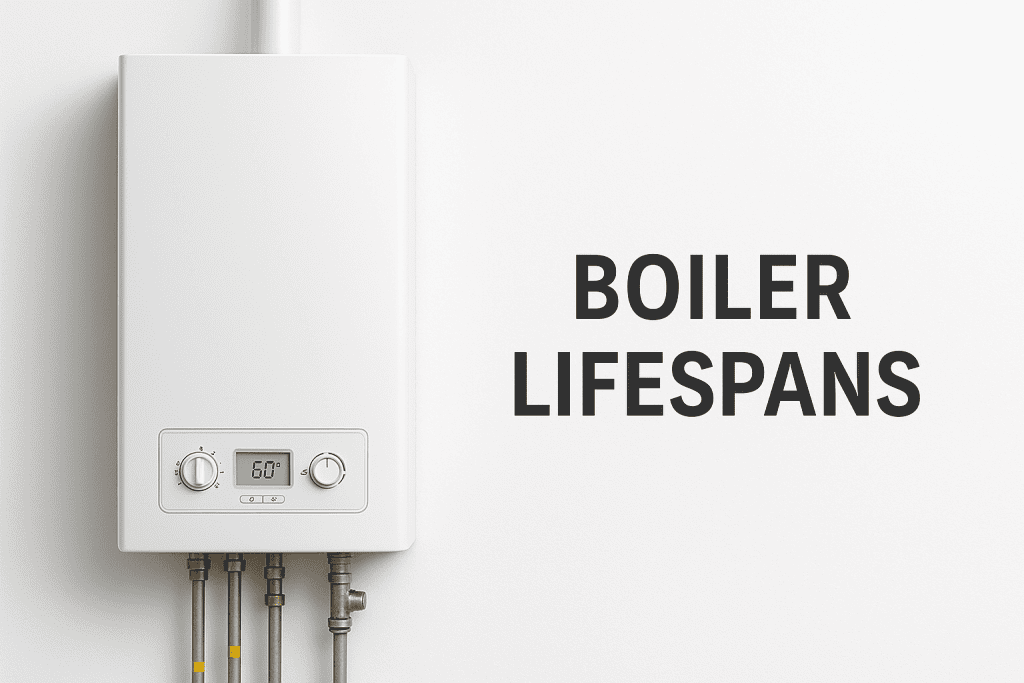
Typical Boiler Lifespans by Type: Combi, System, Conventional, and Condensing
Boiler type influences expected lifespan because design, load profile, and component stress vary. A combi boiler (combination boiler) often lasts around 10 to 15 years in typical UK homes. Combi units work hard because one appliance provides both space heating and hot water on demand, so heat exchangers and diverter valves can wear sooner when usage stays high.
System boilers commonly reach 12 to 18 years. The separate hot water cylinder reduces rapid cycling, which can ease strain on key parts. Conventional (regular) boilers, used with a cylinder and cold-water tank, often achieve 15 to 20 years, particularly in larger properties where steady demand suits the layout.
Condensing boilers describe an efficiency method rather than a distinct category, since combi, system, and conventional models can all be condensing. When installed and set up correctly, a condensing boiler can match the lifespans above, yet poor condensate drainage or incorrect return temperatures can shorten service life. For UK context on boiler types and efficiency, see Energy Saving Trust. Manufacturer guidance also varies by model; consult the relevant support pages from brands such as Vaillant or Worcester Bosch.
Key Factors That Shorten Boiler Life: Water Quality, Usage Patterns, and Installation
Boilers rarely fail from age alone. In many homes, a few practical factors accelerate wear, reduce efficiency, and increase breakdown risk.
- Water quality (hardness, debris, and corrosion)
- Usage patterns (how often and how hard the boiler runs)
- Installation quality (system design, commissioning, and protection)
Water quality has a direct effect on heat transfer and component life. Hard water promotes limescale, which insulates heat exchanger surfaces and forces the boiler to run hotter for longer. That extra heat stress can shorten the life of seals, pumps, and the heat exchanger itself. Dirty system water also causes problems. Sludge and magnetite (a black iron oxide) can block small waterways, restrict flow, and damage moving parts. HSE guidance on safe maintenance reinforces the value of competent servicing, which includes checks that help identify contamination and corrosion early.
Usage patterns matter because boilers wear through cycling and sustained load. Frequent on-off cycling increases ignition and fan wear, while long periods at high output raise thermal stress. A combi boiler can suffer when several hot taps run often, since the appliance must switch rapidly between heating and hot water. Settings also play a part. Excessively high flow temperatures can increase scaling and stress, while poorly balanced radiators can cause short cycling and uneven return temperatures.
Installation quality often decides whether a boiler reaches its expected lifespan. Incorrect sizing leads to inefficiency and cycling, while poor pipework design can create noise, air problems, and restricted circulation. Protective measures also count. A magnetic filter, correct inhibitor dosing, and thorough flushing at installation reduce debris and corrosion. Gas Safe Register sets the UK standard for competent gas work, and a registered engineer should commission the boiler correctly, record key readings, and explain the controls. Those steps help the system run cleanly and steadily, which supports a longer service life.
Warning Signs Your Boiler Nears End of Life: Breakdowns, Rising Bills, and Performance Drops
A boiler that nears the end of its life rarely fails without warning. Frequent breakdowns rank among the clearest signs. If call-outs become routine, parts such as pumps, fans, and diverter valves may start to fail in quick succession. Repair costs can then rise faster than expected, especially when faults spread across several components.
Rising energy bills often point to a performance decline. As internal surfaces wear or become coated with deposits, the boiler must run longer to deliver the same heat. Homeowners may notice radiators taking longer to warm up, hot water turning inconsistent, or the boiler cycling on and off more often than usual. Those changes can also indicate control or sensor issues that become more common with age.
Pay close attention to safety-related symptoms. Persistent yellow or orange flames, soot marks near the appliance, or unusual smells require urgent action. Arrange a check by a Gas Safe Register engineer, since poor combustion and flue problems can raise carbon monoxide risk. If an engineer flags repeated combustion faults, failing seals, or obsolete parts, replacement often becomes the safer and more cost-effective option.
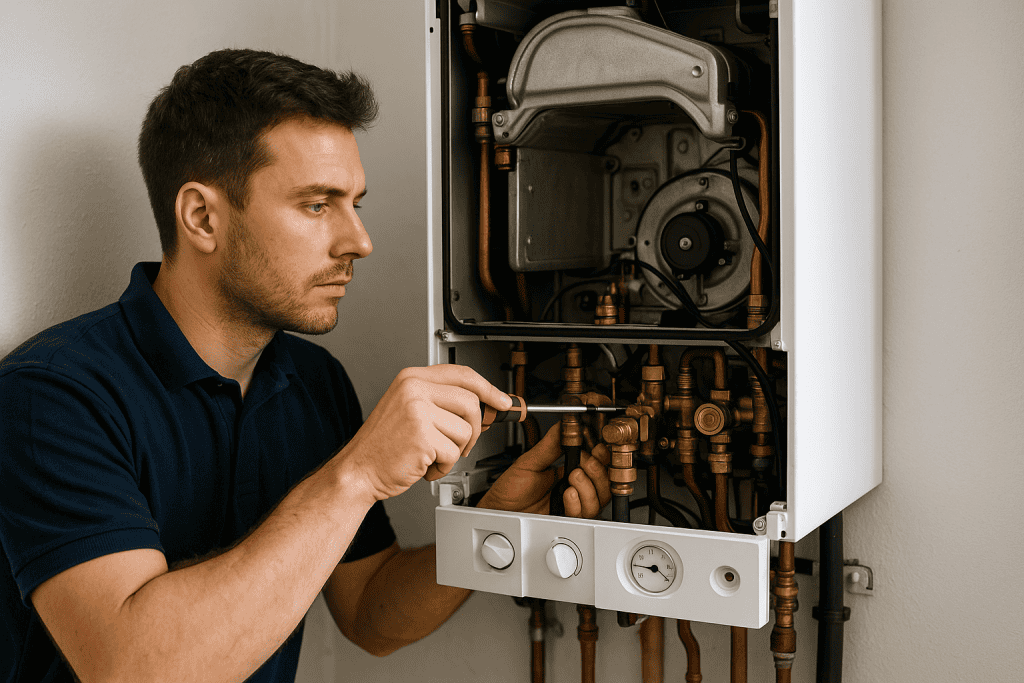
Repair or Replace: Practical Thresholds Based on Cost, Parts, and Reliability
Use three practical thresholds to decide between repair and replacement: cost, parts availability, and reliability. As a rule, replace when a single repair approaches 30 to 50 per cent of the price of a new, correctly sized boiler, especially once the unit has passed the mid-point of its expected life. Choose replacement sooner if multiple faults appear within a year, since repeat call-outs often signal wider wear rather than an isolated failure.
Parts access matters as much as price. If the manufacturer has discontinued key components, repairs can become slow, expensive, or uncertain. Check support and spares guidance with the boiler maker, or ask a Gas Safe registered engineer to confirm availability via Gas Safe Register resources. Reliability should carry the most weight in homes that rely on constant heating or have vulnerable occupants. In those cases, predictable performance often justifies replacement even when a repair seems affordable.
Replacement Timing and Next Steps: Choosing the Right Boiler and Planning the Changeover
Once replacement makes sense, focus on correct sizing and a planned changeover. An oversized boiler cycles on and off, which wastes fuel and increases wear. A heating engineer can calculate heat loss and hot water demand, then match output to the property and household routines. Ask about future changes, such as an extension or extra bathrooms, so the specification remains suitable.
- Choose the right type: combi for limited space and no cylinder; system or conventional where high hot water demand suits stored hot water.
- Prioritise efficiency controls: weather compensation and smart controls can cut running costs when set up correctly.
- Protect the system: specify a magnetic filter and inhibitor to reduce sludge and corrosion.
- Check installer competence: use a Gas Safe Register engineer for gas work.
Plan the changeover to minimise disruption. Confirm whether the job needs a system flush, condensate pipe routing, or a flue change. Ask for a written quote that lists controls, filters, flushing method, and warranty terms. After installation, keep commissioning paperwork and benchmark settings, then book annual servicing to protect efficiency and warranty cover. Request a clear handover on control settings and fault indicators.
Frequently Asked Questions
How long does a typical boiler last in the United Kingdom?
A typical boiler in the United Kingdom lasts about 10 to 15 years. Lifespan varies with boiler type, installation quality, water hardness, usage, and servicing. Regular annual servicing and prompt repairs can extend service life, while frequent breakdowns, rising energy bills, or difficulty sourcing parts often signal that replacement makes better sense.
Which warning signs indicate that a boiler may need replacing soon?
Warning signs include frequent breakdowns, rising energy bills, uneven heating, slow hot water, unusual noises (banging or whistling), leaks, rust or soot marks, and a yellow flame instead of blue. Persistent low pressure, repeated fault codes, or difficulty sourcing parts also suggest replacement may be due soon.
When does repairing a boiler cost more than replacing it?
Repairing a boiler costs more than replacing it when a major component fails (heat exchanger, main PCB, or burner) and the quote exceeds about 30–50% of a new boiler, especially on units over 10–15 years old. Frequent breakdowns, rising bills, and scarce parts also indicate replacement offers better value.
How does boiler type and fuel (gas, oil, electric) affect expected lifespan?
Boiler type and fuel influence wear and servicing needs. Gas boilers often last 10–15 years with regular maintenance. Oil boilers can reach 15–20 years, although burner and tank components may need earlier replacement. Electric boilers often last 15–20 years because they have fewer moving parts, but limescale and electrical faults can shorten life.
What factors can shorten a boiler’s lifespan, and how can maintenance extend it?
Hard water, poor installation, incorrect boiler sizing, low system pressure, sludge (corrosion debris), frequent short cycling, and ignored leaks can shorten a boiler’s lifespan. Annual servicing, system flushing, inhibitor chemicals, correct pressure checks, prompt repairs, and clean filters help the boiler run efficiently, reduce corrosion, and prevent overheating, which can extend service life.